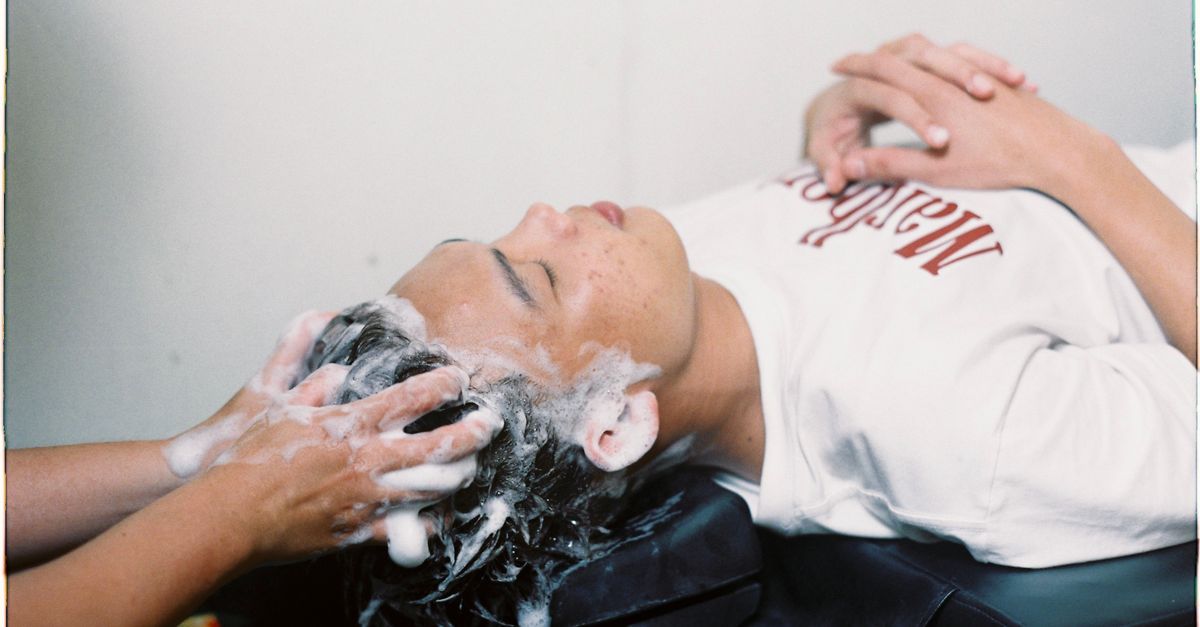
Your client sits down, the colour is done, the blow-dry is finished, and on the way out they mention: "My scalp has been itching for weeks, and it gets oily so fast lately." Most salons answer with a nod and a shampoo tip. Yet it is a ready-made request for one of the fastest-growing services of the past few years: the head spa, the scalp-care ritual that started in Japanese salons and spread worldwide through social media.
A head spa combines a scalp check, deep cleansing, exfoliation, a mask, a long massage and a calming rinse, usually over 45 to 90 minutes. For the client it is treatment and relaxation in one. For the salon it turns a quiet backwash basin or an underused treatment room into a recurring source of revenue. Getting it right comes down to five things: space, protocol, price, packages and follow-up.
Why now: winter is the hardest season for the scalp
From October to March, scalp complaints climb. Central heating and dry air dehydrate the skin; hats and beanies trap heat and increase oiliness; long hot showers trigger sensitivity. Flaking, itching, tightness and static all come up more often at the front desk during these months.
That shifts the head spa from "a ritual that looks great on Instagram" to a service that answers a real need. Clients book it to relax and come back because they feel the difference.
Setting up the service: space, equipment and protocol
You do not need to build a new room. A quiet backwash station or an underused treatment room is enough to start. What matters is a quiet, softly lit space where the client can switch off for an hour without interruptions.
Basic equipment checklist
- A reclining backwash chair with proper neck support
- A magnifying lamp or simple scalp camera for the initial check
- Scalp scrub, clarifying shampoo, mask and tonic from the brand you already stock
- Warm towels, dimmable lighting and a calm playlist
A standard 60-minute protocol
- Consultation and scalp check (10 min): discuss concerns, products used at home and washing habits; examine the scalp.
- Pre-cleanse and exfoliation (10 min): remove product build-up and dead skin.
- Massage (20 min): neck, shoulders and scalp.
- Mask and rest (10 min): hydrating, balancing or soothing, depending on the concern.
- Rinse, tonic and dry (10 min): finish with a light style.
A written protocol means every client gets the same experience whoever performs it, and that consistency makes rebooking easy.
Price it with numbers, not guesswork
The most common mistake with trend services is copying a competitor's price. A head spa is long and fully one-to-one, so its price has to be built on your cost per minute.
For example: say your salon's cost per minute, including rent, staff, energy and overheads, is €0.80. Sixty minutes of time costs €48. If the scrub, shampoo, mask and tonic used per session add up to €9, your direct cost is €57. Priced at €90, each session leaves a contribution of about €33. Forty sessions a month, roughly ten a week, adds about €1,320 in contribution.
In sysSalon you enter price, cost and duration together on the service definition. Once you link the products a service uses, the relevant stock is deducted every time the service is performed, so "why did the masks run out so fast this month?" stops being a mystery.
Tip: offer a 45-minute and a 75-minute version. The short one is the entry point for first-timers; the long one becomes the higher-margin choice for regulars.
Start with a hair analysis, continue with a package
What turns a head spa from a one-off treat into ongoing care is a measurable starting point in the first session. If clients cannot see what has changed, the next appointment drifts into "some time soon".
sysSalon's AI-powered hair analysis assesses hair type and hair health from a photo and produces a PDF report. Running it in the first session gives the client a concrete answer to "why are you recommending this?". Save the result, a photo of the scalp and the mask you used as notes on the client profile; four weeks later, a photo from the same angle lets you review the progress together.
Example winter course
- Four-session winter course: three to four weeks apart, around 10–15% below the single-session price
- Split payment: half at the first visit, the rest at the second
- Before-and-after analysis: a hair analysis report at the start and at the end of the course
Sold as a multi-session package in sysSalon, every session is tracked as used, scheduled or remaining on one screen. If a client does not show up, you mark the session as "Forfeited" or "No-show" according to your policy, so there is no debate about package balances at reception.
Calendar and room planning: a long service should not block the floor
Put a 60-minute service in the wrong slot and it ties up a basin on a busy Saturday afternoon while the blow-dry queue grows. Set clear rules in the diary:
- Steer head spa bookings to weekday daytime and early evening; release only a few slots at peak times.
- Assign the service to a specific room or basin so two bookings never land on the same space.
- Avoid scheduling it on the same day as chemical services like colour; if combined with a cut, do the head spa first.
sysSalon's room view shows which room is booked when, and conflict prevention by staff member and by room means two head spa appointments can never be placed on the same basin. For combined visits, you can assign a different team member and room to each service line within one appointment.
How to talk about it with clients
The most natural way to sell a head spa is to start from the client's own concern. "You mentioned the itching; we do a treatment focused on exactly that" works far better than "we have a new service". In practice:
- Offer a three-to-five-minute scalp massage during the regular wash and explain the full service while you do it.
- Agree on one sentence the whole team uses to describe the benefit.
- Share a short video of a session or photos of the space on social media; trend searches surface this kind of content.
- After the first session, give two simple at-home tips. They reinforce the reason for the second visit.
Turn the trend into lasting revenue
A head spa answers the scalp complaints that peak in winter, makes better use of space you already have and naturally repeats. You need four things: a written protocol, a price based on your cost per minute, a package that starts with an analysis, and clear rules in the calendar. Set these up properly and the service will stay a profitable line on your menu long after the hashtag fades.
If you want to run all of this in one place, from service setup and stock deduction to package tracking and room planning, start with sysSalon's free plan today. No credit card, no time limit. Prefer a walkthrough tailored to your salon? Request a demo, or browse everything on the features page.
#head spa #scalp care #hair analysis #treatment packages #service menu #winter care