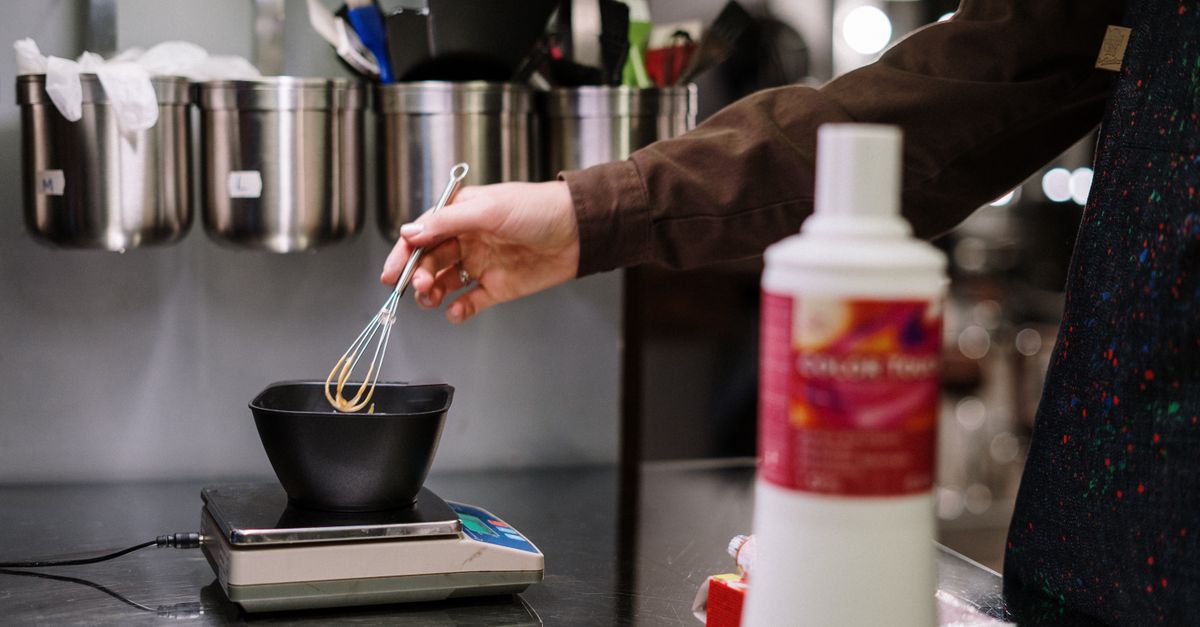
It is the end of the month and you are looking at the till. The book was full, turnover looks decent, yet the profit is not where you expected it to be. You ordered twelve boxes of colour last month and the shelf is empty again. The developer has run out, and nobody knows where two bottles from the keratin range went. In many salons the cost that silently eats profit is not rent or wages. It is product usage that nobody really measures.
This article is not about theory. Step by step, you will see how to work out what a colour service really costs you, how to separate waste from shrinkage, how to get supplier and purchase records in order, and how to reflect that cost properly in your service prices.
What does one colour service really cost you?
Most salon owners set prices by looking at the salon down the street. Yet two salons charging the same price can end up in very different places: one makes money, the other loses it, and the difference often sits inside the mixing bowl. To calculate product cost per service you only need a few simple figures:
- Pack price and size: if a 60 ml tube costs €12, every millilitre costs €0.20.
- Standard usage: how many millilitres of colour and developer does a root touch-up on medium-length hair actually take?
- Supporting products: colour-safe shampoo, mask, gloves, foil, towel laundry.
Let us run a hypothetical example. A root colour uses 60 ml of colour (€12), 90 ml of developer (at €18 per litre, about €1.60), shampoo and mask (around €1.80), plus gloves and foil (around €0.80). Total product cost: roughly €16.20. If you charge €60 for the service, product accounts for about 27 percent. If long hair takes 90 ml of colour and the price stays the same, that share jumps to more than 35 percent.
Do this calculation once for your five or six most frequent services: root colour, full colour, highlights, keratin, facials, manicure. Write a "standard recipe" for each.
Separate waste from shrinkage
Not every gap in your stock has the same cause. Mix the two up and you will fix the wrong problem.
Waste: unavoidable, but manageable
Colour left in the bowl, expired products, a knocked-over bottle, developer that goes off after opening: that is waste. You cannot bring it to zero, but you can shrink it. Mixing by weight on a scale, preparing colour for long hair in two rounds when needed, and stacking shelves on a first-in, first-out basis make a noticeable difference.
Shrinkage: usage that never gets recorded
Shrinkage is stock that leaves without a trace: product used off the record, staff taking items for personal use, free trial-size bottles handed to clients, counting errors. The cause is usually not bad intent but the lack of a system. When nobody records what was used and how much, every gap gets written off as "waste".
Tip: once a month, count your ten most expensive products and compare the result with the stock level in your system. If the gap is above 5 percent, check your recipes first and your purchase records second. The problem is almost always in one of the two.
Deduct product from stock as the service is sold
A handwritten stock book almost always falls behind after a busy Saturday. That is why usage should be recorded together with the service. In sysSalon you can set price, cost, duration and stock for every service and product, and the product used in a service is deducted from stock when the sale is made. The question "How many root colours did we do this month, and how much colour should have left the shelf?" is then answered by records, not guesswork.
This setup has two practical benefits:
- You can compare theoretical and actual usage. The gap between what the system deducted and what is on the shelf shows the real size of waste and shrinkage.
- You see consistency per team member. Noticing that one stylist always uses more product for the same service helps you spot a training need early.
Low-stock alerts are coming to sysSalon soon. Until then, set a simple minimum for key products and check it during your weekly count: for example at least four tubes of your three best-selling shades and at least two litres of developer.
Get supplier and purchase records in order
You cannot calculate product cost correctly unless you know what you paid for the product. If invoices sit in one folder and payments in another notebook, nobody can say for sure what a product currently costs.
Use this checklist for clean purchase records:
- Record every purchase with date, supplier, product, quantity and unit price.
- Track what you owe each supplier and what you have paid in one place.
- When a unit price changes, update the cost in your service recipes too.
- If you buy the same product from two suppliers, compare the unit price of the last three orders.
In sysSalon you can keep supplier and purchase records and see from the supplier account statement exactly how much you owe to whom. Purchased products go into stock and come out as they are used in services, so buying and usage meet at two ends of the same chain.
Build product cost into your service prices
Once you know the cost, pricing stops being guesswork. A practical method:
- Calculate product cost using the recipe above, adding 5 to 10 percent for waste.
- Add a share of labour and fixed costs based on service time. If your salon's fixed costs run to €20 an hour, a 90-minute service carries €30.
- Set your target margin and check the price against it.
In our root colour example, product (€16.20 plus an 8 percent waste allowance, about €17.50) and fixed costs (€30) add up to €47.50. A €60 price leaves only €12.50, and staff commission has not been included yet. At this point you have three options: update the price, introduce a separate price tier for long hair, or review the recipe and cut unnecessary usage. For most salons the fairest answer is pricing by hair length, and clients easily understand why they pay a different amount.
Take control: start with the free plan today
Controlling product costs is not a big project. Write recipes for your most frequent services, record usage together with the service, keep purchases in one place and review prices based on that data. These four steps turn the month-end question "Where did the money go?" into "I know exactly where it went."
With sysSalon you can run this whole flow from one account, from service and product setup and stock deduction to supplier records and account statements. See the features page for the details. Start with the free plan now: no credit card required and no time limit. If you would like a walkthrough tailored to your salon, get in touch and our team will help you set up your stock and cost routine.
Cover photo: cottonbro studio / Pexels
#stock management #product cost #salon finance #colour usage #service pricing